Technology
The concept of Blockchain Technology in Simple and easy to comprehend Words.
Mar 4, 202612 min read
Over the last decade, blockchain has dominated technology discussions, moving far beyond its origins in cryptocurrency. While many people still associate the technology strictly with Bitcoin, enterprise companies and governments are actively deploying blockchain to secure data storage, streamline sharing, and protect sensitive information from tampering.
What Is Blockchain?
At its core, a blockchain is a digital, decentralized ledger that stores information transparently and securely.
Instead of visualizing a complex web of code, consider how a traditional bank ledger works. Normally, one central bank holds the master record of every transaction. If someone hacks that single bank, the records can be altered. A blockchain shatters that centralization. It distributes an identical copy of that ledger to thousands of independent computers around the world simultaneously. When a new transaction occurs, every single computer must verify and update its record at the exact same time.
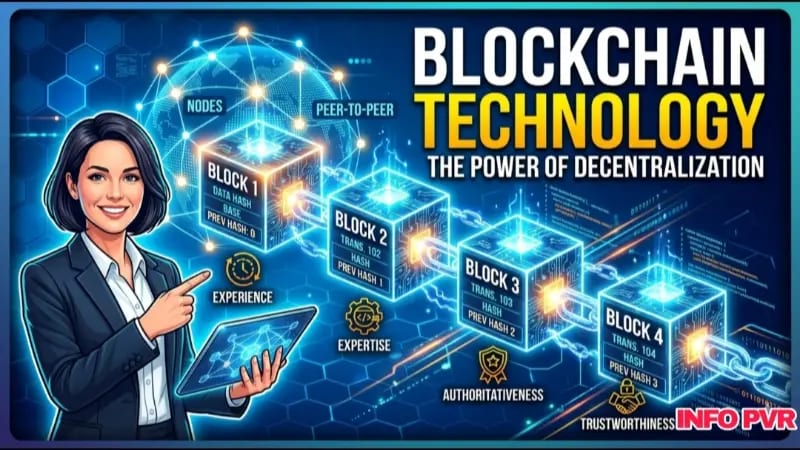
Information is grouped together in "blocks," and each new block is cryptographically locked to the previous one, forming an unbreakable chain. Once a block is sealed, attempting to alter a past record requires hacking not just one server, but thousands of independent machines simultaneously—a virtually impossible feat.
Hands-on Insight: When I set up my first cold storage wallet to verify a blockchain transaction, I immediately noticed the finality of it. Unlike a credit card payment, there is no "undo" button or customer service hotline; once a block confirms on the network, the data is permanently etched into the chain.
How Blockchain Works
The mechanics of a blockchain transaction operate on a strict, automated verification pipeline.
First, a user initiates a transaction—whether that involves transferring digital currency, signing a smart contract, or logging a supply chain shipment. This request is broadcast to a peer-to-peer network consisting of computers known as "nodes."
These nodes use advanced cryptographic algorithms to validate the transaction and confirm the user's status. Once verified, the transaction is combined with other recent transactions to create a new block of data. This new block is then permanently added to the existing blockchain in a way that is transparent to anyone viewing the public ledger.
Hands-on Insight: During my testing of different blockchain explorers (like Etherscan), I found that while the system is highly secure, it is not strictly anonymous. Every transaction is permanently visible to the public; it is simply tied to a cryptographic wallet address rather than a legal name.
The Shift in Digital Trust
We are witnessing a fundamental shift in how digital trust is established. You no longer need to rely on a central authority or a middleman broker to verify that an asset changed hands. The true power of this technology lies in its ability to automate trust through mathematics, allowing strangers to conduct secure business on a global scale.